


As housing shortages persist and consumer costs remain elevated, millions of Americans are navigating vouchers with looming expiration dates. What to do if your voucher is expiring depends on the program and issuer, but housing officials and consumer advocates agree on one point: once the deadline passes, options narrow sharply, and lost benefits are often irreversible.
Table of Contents
Why Voucher Expirations Matter More Now
Voucher expiration has long been a feature of assistance and promotional programs, but recent economic conditions have made deadlines more consequential.
In housing markets across the United States, low vacancy rates and rising rents have extended search times for voucher holders well beyond standard allotments. According to federal housing data, many metropolitan areas report vacancy rates below 5 percent, limiting available units that meet voucher program requirements.
At the same time, airlines, retailers, and service providers have issued record numbers of vouchers since the COVID-19 pandemic, often with restrictive expiration terms. Consumer advocacy groups report a steady increase in complaints related to expired travel credits and promotional vouchers.
“The volume is unprecedented,” said a consumer policy researcher who studies post-pandemic travel trends. “Many people are discovering expiration rules only when time is nearly up.”
How Voucher Expiration Rules Work
Voucher expiration policies vary widely depending on whether the voucher is issued by a government agency or a private company.
Housing Assistance Vouchers
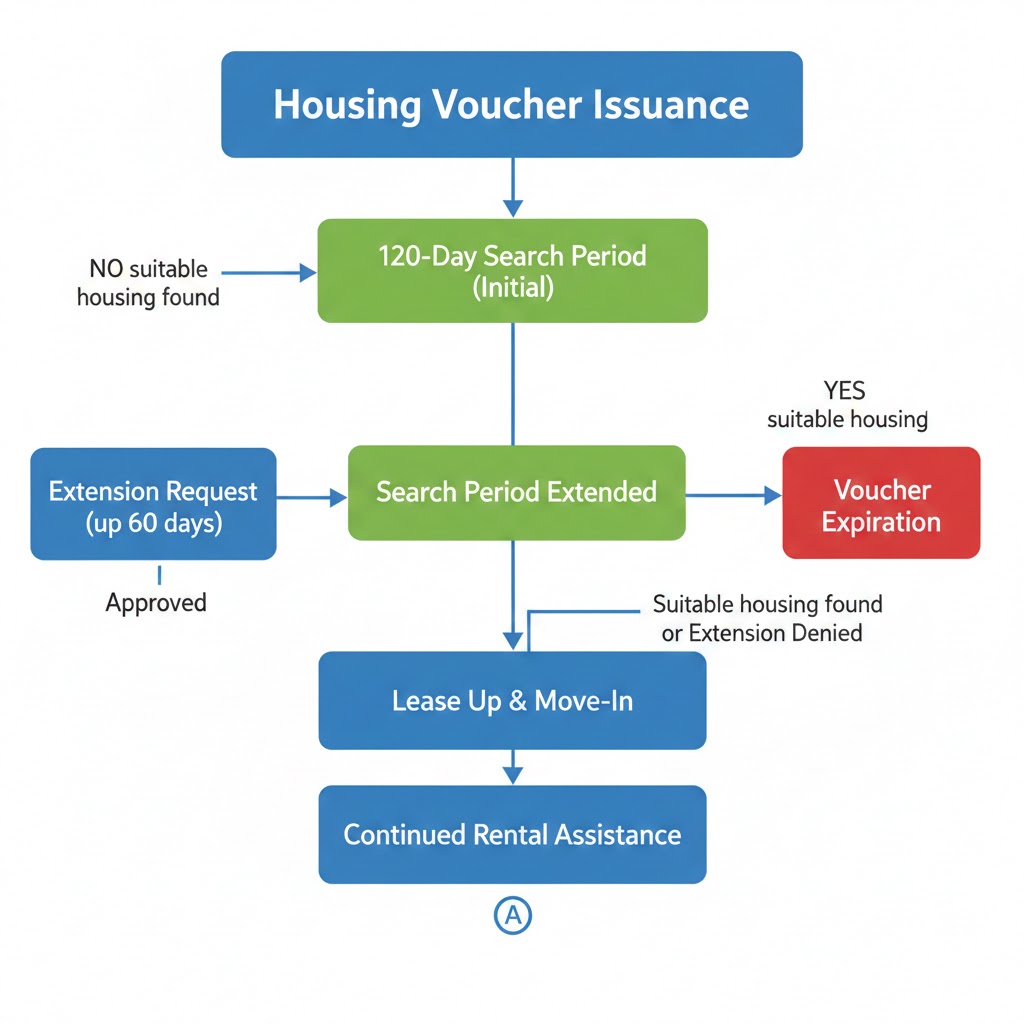
Housing vouchers administered by local public housing agencies operate under guidance from the U.S. Department of Housing and Urban Development. Most housing choice vouchers include an initial search period, typically between 60 and 120 days.
Extensions may be granted, but they are discretionary and must usually be requested before the voucher expires. Local agencies often require proof that recipients have actively searched for housing and encountered barriers beyond their control.
HUD guidance emphasizes that extensions are not guaranteed and depend on local policy, funding constraints, and market conditions.
Travel, Retail, and Service Vouchers
Private-sector vouchers, including airline credits, event tickets, and retail promotions, are governed by company policy and, in some cases, state consumer protection laws.
Unlike housing vouchers, private vouchers often expire automatically, with limited recourse once the deadline passes. Some companies allow extensions as a courtesy, while others enforce expiration strictly.
Requesting an Extension: Timing and Documentation
Housing Voucher Extensions
Housing officials and advocates consistently stress that extension requests should be submitted as early as possible.
Most housing authorities require documentation showing sustained effort, such as:
- Records of unit inquiries
- Emails or messages to landlords
- Application confirmations
- Notes from property visits
“Documentation demonstrates compliance,” said a former housing authority administrator. “It shows the household did what it could within a difficult market.”
Failure to request an extension before expiration often results in automatic termination of the voucher.
Extensions for Consumer and Travel Vouchers
For airline and retail vouchers, consumer advocates recommend contacting customer service well before expiration. In some cases, companies may reissue credits or convert them to points, particularly if the original voucher resulted from service disruptions.
However, policies differ widely, and approvals are inconsistent.
Search Strategies as Deadlines Approach
Housing Search Challenges
Voucher holders face unique constraints, including rent caps, inspection requirements, and landlord participation. These factors often lengthen search timelines compared with market-rate renters.
Housing counselors advise broadening search criteria when deadlines approach. This may include expanding geographic areas, adjusting move-in timelines, or considering alternative unit types.
“Flexibility is often the deciding factor,” said a nonprofit housing navigator who works with voucher recipients in large urban areas.
Some housing authorities maintain lists of landlords who have previously accepted vouchers, though availability can change quickly.
Strategies for Non-Housing Vouchers
For consumer vouchers nearing expiration, experts suggest exploring whether partial redemption is possible. In several states, gift card laws require businesses to honor residual value even after promotional periods end.
Consumers may also check whether vouchers are transferable, though resale or transfer is often restricted by terms and conditions.
Legal and Regulatory Considerations
Voucher expiration is shaped not only by policy but also by law.
Housing Law Context
At the federal level, housing voucher rules are shaped by HUD regulations, but enforcement and interpretation vary locally. Some jurisdictions require housing authorities to grant extensions as a reasonable accommodation for people with disabilities.
Failure to request such accommodations explicitly may limit later appeals.
Consumer Protection Laws
State laws governing gift cards and promotional vouchers differ significantly. Some states prohibit expiration dates entirely for certain types of stored value cards, while others allow expiration with proper disclosure.
Consumer law experts advise reviewing state statutes when disputing expired vouchers, particularly for high-value credits.
Case Examples: What Expiration Looks Like in Practice
In one large Midwestern city, a family lost a housing voucher after failing to secure a unit within the allotted period. Despite submitting several applications, the household did not formally request an extension before the expiration date.
The local housing authority declined reinstatement, citing policy limits and waiting list pressures. The family later rejoined the waitlist, which officials estimated would take several years.
In contrast, a West Coast renter successfully obtained a 60-day extension by documenting repeated rejections from landlords unwilling to participate in the voucher program.
“These outcomes often hinge on timing, not effort,” said a housing policy analyst familiar with both cases.
What Happens When a Voucher Expires
Housing Vouchers
Once expired, housing vouchers are typically terminated. Reinstatement is rare and usually limited to administrative errors or documented agency fault.
Participants who lose vouchers must often reapply, returning to waiting lists that may be closed or years long.
Consumer and Travel Vouchers
For private vouchers, expiration usually means forfeiture. Some companies allow goodwill exceptions, but these are discretionary and inconsistent.
Consumer advocates note that expired vouchers represent lost economic value, particularly for lower-income households.
Policy Debates and Future Changes
Advocates argue that rigid expiration policies fail to account for market realities, especially during periods of housing scarcity or widespread service disruption.
Some housing agencies have experimented with longer initial search periods or automatic extensions during emergencies. Consumer groups have similarly called for standardized expiration rules for travel credits.
Whether such changes gain traction remains uncertain, as agencies and companies balance flexibility against administrative and financial constraints.
Key Insights at a Glance
| Key Fact | Detail | Source |
|---|---|---|
| Typical housing voucher search period | 60–120 days | HUD guidance |
| Extension approval | Discretionary, documentation required | Local housing agencies |
| Consumer voucher expiration | Often strict, varies by company | Consumer Reports |
| Reinstatement after expiration | Rare | Housing authority policy |
FAQ
Can a voucher be extended after it expires?
In most cases, no. Extension requests must be made before expiration.
Are housing voucher rules the same everywhere?
No. HUD sets federal guidance, but local agencies determine specific policies.
Do state laws protect expired retail vouchers?
Sometimes. Protections vary by state and voucher type.
Can vouchers be transferred or sold?
Usually not. Most programs prohibit transfer.
Looking Ahead
As voucher use expands and markets remain tight, expiration deadlines are becoming a critical pressure point for households and consumers alike. Policymakers continue to debate reforms, but for now, experts emphasize vigilance.
“The deadline is not flexible unless you act before it arrives,” said a housing authority official. “That reality has not changed.”