

Housing denials are increasingly shaping access to rental and subsidized housing across the United States, as landlords and housing authorities apply stricter screening standards amid limited supply. For millions of applicants, rejection often arrives with little explanation, raising questions about fairness, legality, and whether denials can be challenged or reversed.
Table of Contents
Housing Denials
| Key Fact | Detail |
|---|---|
| Rental competition | Vacancy rates remain near historic lows in major U.S. cities |
| Leading denial reasons | Income, credit history, prior evictions, incomplete applications |
| Legal protections | Federal law bars discrimination in housing decisions |
A Growing Feature of the Housing Landscape
Housing denials are not new, but their frequency has increased as rental demand continues to outpace supply. Since the early 2000s, population growth, slower housing construction, and rising costs have steadily narrowed options for renters.
Following the COVID-19 pandemic, demand rebounded faster than new housing development. According to federal housing data, many metropolitan areas now see dozens of applicants for a single available unit, giving landlords broader discretion in selection.
“In this environment, even minor issues can become disqualifying,” said an urban economist who studies rental markets. “That is a significant shift from periods when landlords struggled to fill vacancies.”
The Mechanics of Housing Denials
Financial Thresholds and Risk Assessment
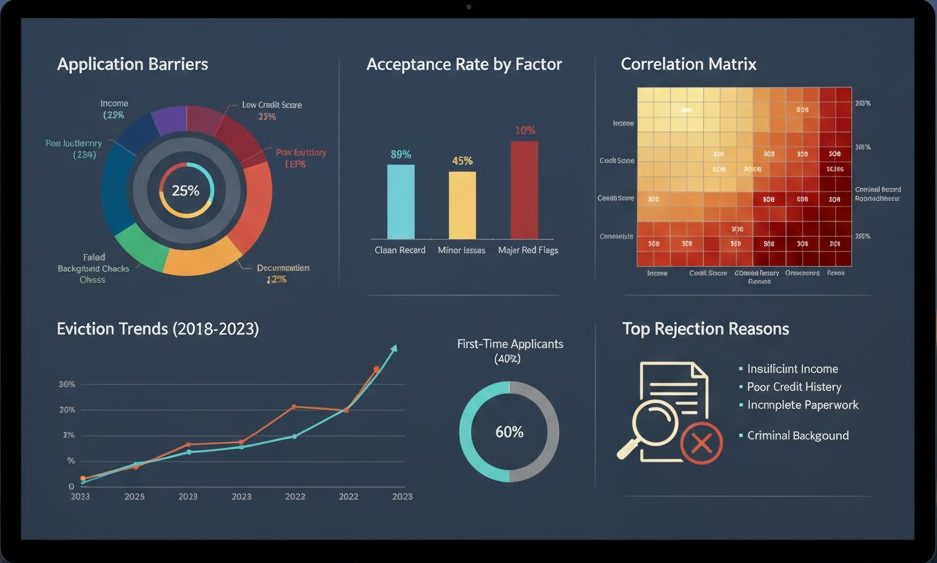
Income requirements remain the most common reason for housing denials. Property owners frequently require applicants to earn multiple times the monthly rent, a benchmark that has become harder to meet as rents rise faster than wages.
Credit history also plays a growing role. Missed payments, collections, or limited credit files may raise concerns about reliability, even when applicants can afford rent.
Housing authorities administering subsidized housing apply different rules. Instead of minimum income thresholds, they enforce maximum income limits and detailed eligibility criteria tied to federal or local guidelines.
Background Checks and Rental History
Past evictions or criminal records often trigger housing denials, though standards vary widely. Federal guidance discourages blanket exclusions, urging housing providers to consider the nature, severity, and recency of any offenses.
Still, tenant advocates say broad screening remains common.
“Many applicants are rejected without meaningful individual review,” said a fair-housing attorney. “That raises both equity and legal concerns.”
Administrative Errors and Documentation Gaps
Incomplete applications account for a significant share of denials. Missing pay stubs, inconsistent household information, or unsigned forms may lead landlords to move on quickly, especially when demand is high.
Public housing agencies cite similar issues, noting that verification requirements are extensive and time-sensitive.
Who Is Most Affected by Housing Denials
Research consistently shows that housing denials disproportionately affect lower-income households, younger renters, and communities of color. While not all disparities stem from discrimination, housing scholars note that structural inequalities play a role.
“Credit systems, income volatility, and past housing instability are not evenly distributed,” said a sociologist specializing in housing access. “Denials often reflect those broader patterns.”
Families with children also face unique challenges, particularly in markets with limited large units. Applicants needing accessible housing report longer wait times and higher rejection rates.
Legal Boundaries and Fair Housing Protections
Under federal law, housing providers may not deny applications based on race, color, religion, sex, disability, family status, or national origin. Many states and cities extend protections to cover income source, sexual orientation, or immigration status.
Regulators emphasize that discrimination can occur even without explicit intent. Policies that disproportionately exclude protected groups may still violate fair housing laws.
Applicants who believe a denial was unlawful can file complaints with housing agencies or pursue legal action. Enforcement agencies encourage documentation and prompt reporting.
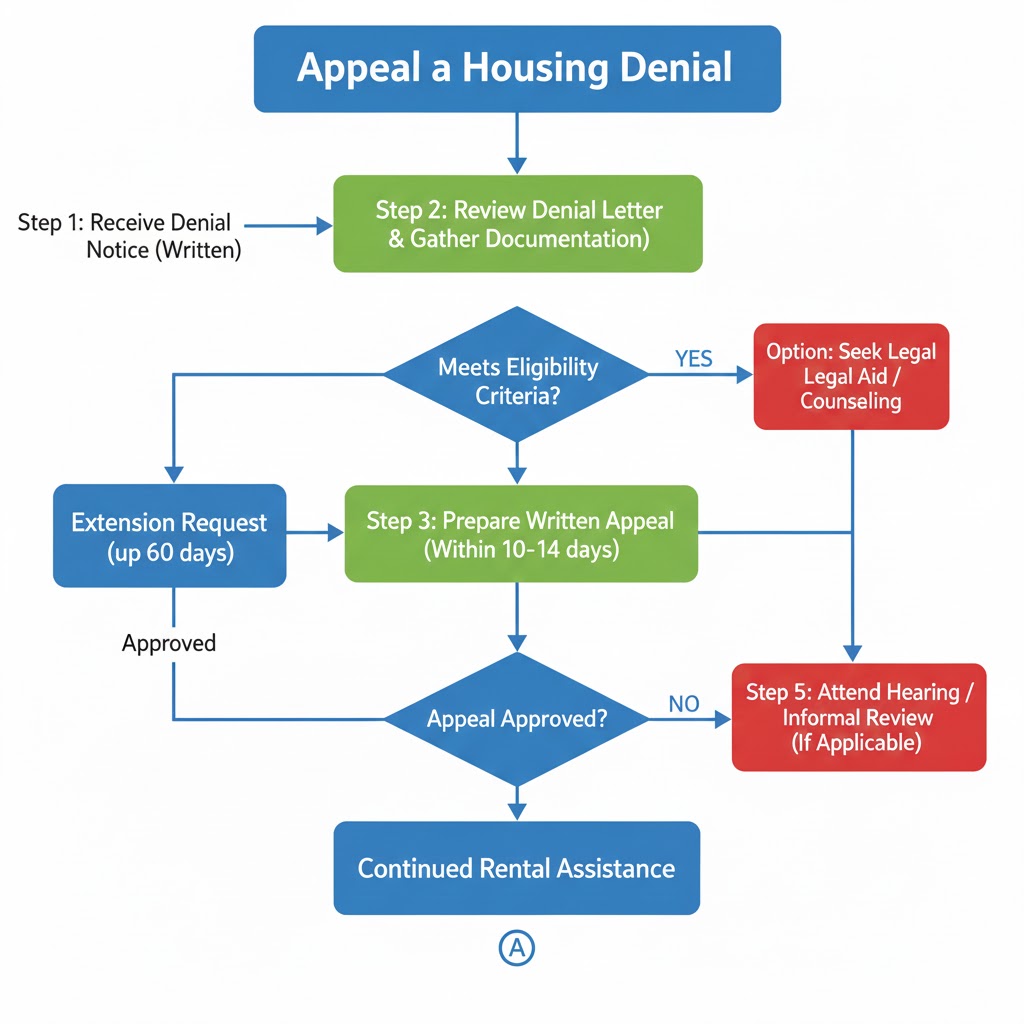
Appealing a Housing Denial
Understanding the Decision
Applicants denied housing based on a consumer screening report are generally entitled to an adverse action notice. This document should explain the reason for denial and identify the reporting agency used.
Experts recommend reviewing these notices carefully. Errors in credit or background reports are common and often correctable.
Formal Reviews and Hearings
Public and subsidized housing programs typically offer structured appeal processes. These may include informal reviews or formal hearings where applicants can present evidence and explain mitigating circumstances.
Private landlords are not always required to offer appeals, but many reconsider decisions when provided with additional documentation or clarification.
Support from Advocates and Legal Aid
Tenant unions, nonprofit housing counselors, and legal aid organizations play a critical role in helping applicants navigate appeals. Demand for these services has increased alongside housing denials, according to advocacy groups.
Policy Debate: Balancing Risk and Access
Landlords argue that screening criteria protect property owners and existing tenants. They point to thin margins, rising maintenance costs, and legal risks associated with nonpayment.
Tenant advocates counter that overly strict screening exacerbates housing instability and homelessness.
“The system is optimized for risk avoidance, not housing access,” said a policy analyst at a national housing think tank.
Policymakers remain divided. Some jurisdictions have restricted the use of credit checks or eviction history, while others emphasize incentives for housing construction as the primary solution.
The Broader Economic Context
Housing denials are closely tied to affordability pressures. As rents climb, income thresholds effectively exclude a growing share of workers, even those with full-time employment.
Economists warn that persistent denials can slow labor mobility, increase overcrowding, and strain social services.
“These are not isolated decisions,” said an economic policy expert. “They ripple through the broader economy.”
What May Change in the Years Ahead
Looking forward, analysts expect housing denials to remain common unless supply expands significantly or screening practices evolve. Proposed reforms include standardized appeal rights, clearer disclosure requirements, and expanded fair-housing enforcement.
Technology may also play a role, with some landlords adopting alternative screening models that weigh recent payment behavior more heavily than older credit data.
Practical Checklist for Applicants
Before Applying
- Review credit and rental history reports
- Confirm income documentation
- Clarify occupancy and eligibility rules
After a Denial
- Request a written explanation
- Check for factual errors
- File appeals promptly
- Seek legal or advocacy assistance if needed
Final Perspective
For now, housing denials remain a defining feature of a strained housing system. While individual appeals can succeed, experts stress that lasting change depends on structural solutions that expand supply and reduce barriers.
“Housing access is increasingly determined by screening algorithms rather than human judgment,” one advocate said. “That makes transparency and accountability more important than ever.”