
Wheelchair Accessible Housing remains in short supply in Hickory, North Carolina, where disabled residents face long waitlists, rising rents, and limited options in both public and private markets. Despite federal accessibility laws, housing advocates and local officials say structural barriers, aging buildings, and funding constraints continue to restrict access for residents with mobility disabilities.
Table of Contents
Wheelchair Accessible Housing
| Key Fact | Detail |
|---|---|
| Disability prevalence | ~13% of adults in Catawba County report a mobility disability |
| Accessible housing supply | Fewer than 10% of rental units advertise wheelchair accessibility |
| Average wait time | 12–24 months for subsidized accessible units |
| Primary laws | Fair Housing Act, Americans with Disabilities Act (ADA) |
| Main assistance programs | Housing Choice Vouchers, Mainstream Vouchers |
While Hickory’s challenges are not unique, advocates say the city’s size makes solutions achievable if accessibility is prioritized. For now, disabled residents continue navigating a system where legal protections exist, but practical access remains uneven.
A Growing Need in a Mid-Sized City
Hickory, located in western North Carolina’s Catawba Valley, has long served as a regional hub for healthcare, manufacturing, and education. With a population of roughly 43,000, the city is neither rural nor metropolitan, a position that shapes its housing challenges.
According to U.S. Census Bureau estimates, Catawba County’s disability rate exceeds the national average. Mobility impairments are among the most common, particularly among older adults and individuals with chronic health conditions.
“Hickory’s demographics are changing,” said Dr. Lisa Benton, a housing policy researcher at the University of North Carolina at Charlotte. “The population is aging, and medical survival rates have improved. That increases long-term demand for accessible housing.”
What Wheelchair Accessible Housing Actually Means
The term “wheelchair accessible housing” is often used broadly, but experts stress that not all accessibility is equal.
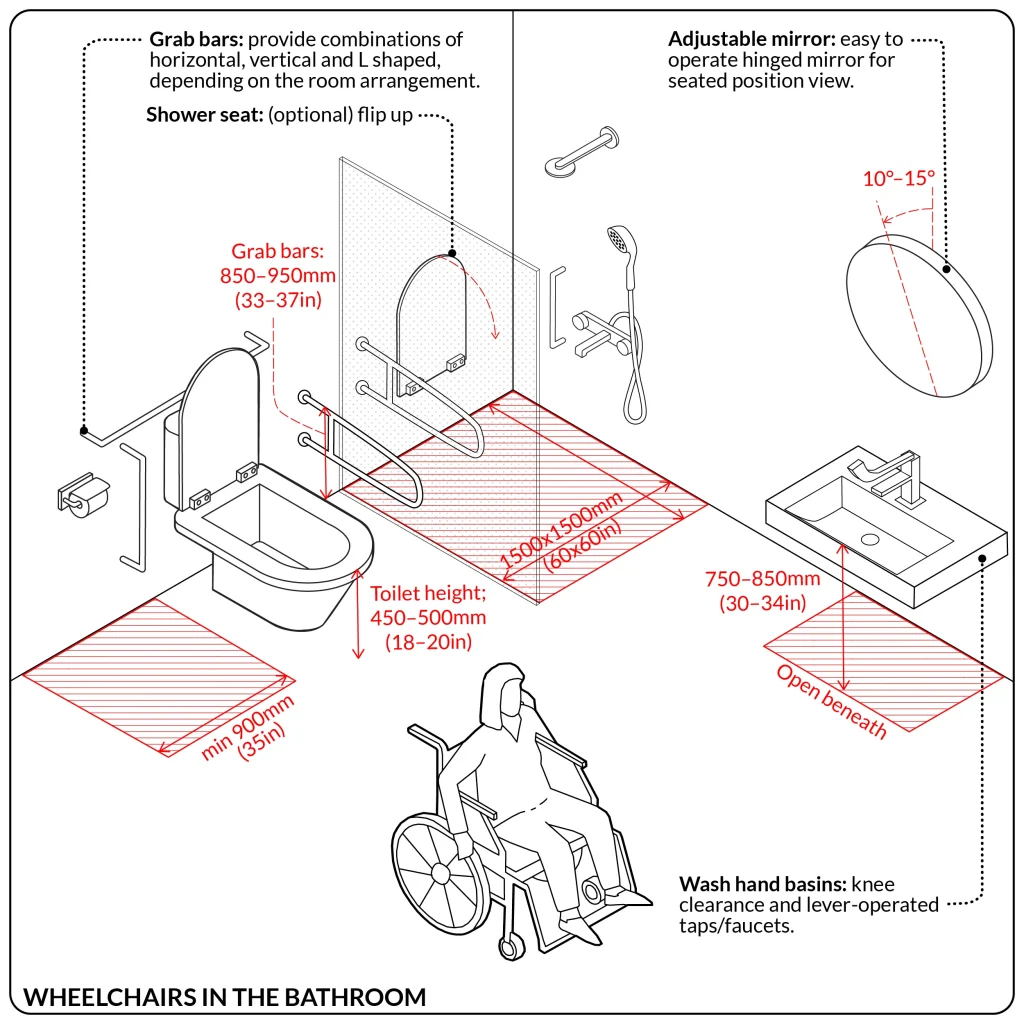
At a minimum, wheelchair-accessible units typically include:
- Step-free entrances
- Doorways at least 32 inches wide
- Bathrooms with turning radius clearance
- Kitchens with reachable counters and appliances
Fully accessible units may also include roll-in showers, lowered cabinets, reinforced walls for grab bars, and accessible parking near entrances.
“Many listings label a unit accessible simply because it’s on the ground floor,” said Sarah McRae, a housing advocate with Disability Rights North Carolina. “That can be misleading for people who use wheelchairs full-time.”
Federal Law: Strong on Paper, Uneven in Practice
Two major federal laws govern accessible housing in the United States: the Fair Housing Act and the Americans with Disabilities Act (ADA).
The Fair Housing Act prohibits discrimination and requires landlords to allow “reasonable modifications,” such as ramps or grab bars, usually at the tenant’s expense. The ADA applies more narrowly, covering public accommodations and certain multifamily housing built with federal funding.
“The laws establish rights, but enforcement depends heavily on complaints,” McRae said. “Many tenants don’t file complaints because they fear eviction or retaliation.”
Legal advocates say this dynamic disproportionately affects low-income and disabled renters who lack legal representation.
Public Housing and Rental Assistance Programs
The Hickory Housing Authority (HHA) operates several public housing developments and administers federal voucher programs, including Housing Choice Vouchers and the Mainstream Voucher Program for non-elderly disabled adults.
Officials say demand for wheelchair-accessible units far exceeds availability.
“We simply don’t have enough units that meet accessibility standards,” said Jonathan Fields, executive director of HHA. “When one becomes available, there’s often already a long list of eligible applicants.”
Wait times for accessible public housing units can exceed two years, according to local housing advocates.
State-Level Programs and Targeted Housing
At the state level, the North Carolina Housing Finance Agency oversees programs that encourage developers to include accessible units in affordable housing projects. Some low-income housing tax credit developments are required to reserve a portion of units for people with disabilities.
However, these programs are competitive and limited.
“Developers face cost pressures, and accessibility features increase construction expenses,” said Mark Reynolds, a Raleigh-based affordable housing developer. “Without additional subsidies, it’s difficult to build at scale.”
The Private Rental Market: A Mixed Picture
In Hickory’s private rental market, accessible units are scarce and often priced above the median rent. According to housing advocates, fewer than one in ten listings explicitly advertise wheelchair accessibility.
Landlords interviewed for this article cited building age as a major constraint.
“Most of our properties were built before modern accessibility standards,” said Thomas Greene, who manages several small apartment complexes in Hickory. “Retrofitting isn’t always structurally possible.”
Still, disability advocates argue that more proactive measures are needed.
“Accessibility should be seen as essential infrastructure, not a luxury,” McRae said.
Transportation and Location Matter
For wheelchair users, housing accessibility extends beyond the unit itself. Proximity to healthcare, grocery stores, and public transportation often determines whether a home is livable.
Hickory’s limited public transit system presents additional challenges. Many accessible units are located far from essential services, forcing residents to rely on paratransit or caregivers.
“An accessible apartment without transportation access is only partially accessible,” said Mark Ellison, a disability services coordinator with Catawba Valley Healthcare.
Human Impact: Living With Limited Options
For many residents, the housing shortage translates into prolonged instability.
A 42-year-old Hickory resident who uses a wheelchair due to a spinal cord injury said he spent more than a year searching for an accessible apartment before securing housing through a voucher program. He asked not to be named, citing privacy concerns.
“I wasn’t looking for anything fancy,” he said. “Just a place I could enter on my own and use the bathroom safely.”
Advocates say such experiences are common.
Why New Construction Has Lagged
Hickory has seen new residential development in recent years, but most projects target market-rate renters or homeowners.
Accessibility advocates say incentives for inclusive design remain limited.
“Developers respond to financing structures,” Dr. Benton said. “If accessibility isn’t required or rewarded, it often gets minimized.”
Local officials say they are exploring zoning and incentive reforms, though no major changes have been adopted yet.
Looking Ahead: Incremental Progress
City leaders acknowledge the gap and say accessibility is increasingly part of long-term planning discussions.
“We recognize the need for more inclusive housing,” Mayor Ron Noland said during a recent city council meeting. “But these projects require partnerships and sustained funding.”
Housing advocates say progress will depend on stronger enforcement, expanded subsidies, and clearer accessibility standards in new developments.
FAQ
What qualifies as wheelchair accessible housing?
Housing with step-free access, sufficient turning space, and fixtures usable by wheelchair users.
Are landlords required to make units accessible?
They must allow reasonable modifications but are not always required to pay for them.
How can residents apply for assistance in Hickory?
Through the Hickory Housing Authority, state housing programs, and local advocacy organizations.
Is accessible housing only for seniors?
No. Accessible housing serves people of all ages with mobility disabilities.