
Local food pantries in Hickory, North Carolina—including the Hickory Soup Kitchen and the Salvation Army—are expanding food assistance efforts as persistent economic pressure keeps demand elevated, according to nonprofit leaders and regional data. While broader economic indicators show stabilization, local providers say food insecurity remains widespread, driven by high living costs, stagnant wages, and uneven access to affordable groceries.
Table of Contents
Local Food Pantries
| Key Fact | Detail |
|---|---|
| Daily meals | Free hot lunches served Monday–Friday |
| Pantry access | Grocery boxes every two months |
| Fresh produce | Weekly drive-through distribution |
| Local need | Thousands rely on assistance monthly |
| Vulnerable groups | Seniors, working families, disabled residents |
As economic pressures persist, Hickory’s local food pantries remain a critical support system for thousands of residents. While nonprofit leaders emphasize that food assistance alone cannot solve systemic inequality, they say the mission remains clear: meet people where they are, one meal at a time.
Local Food Pantries as a Frontline Response
Local food pantries serve as one of the most immediate responses to hunger in Hickory, particularly for residents who fall outside eligibility for federal assistance or experience sudden financial shocks. Community organizations say demand has remained steady since the COVID-19 pandemic, even as emergency programs have ended.
According to Feeding America, food insecurity in western North Carolina consistently exceeds the national average, with rural and semi-urban counties experiencing higher rates than metropolitan areas. Catawba County, home to Hickory, reflects that trend.
“Food insecurity is no longer limited to unemployment,” said Jeff Walker, executive director of the Hickory Soup Kitchen. “We see people who are working full time but still cannot afford groceries consistently.”
Experts say this reflects a broader national shift in the profile of food pantry users, increasingly dominated by working households and older adults on fixed incomes.
Inside the Hickory Soup Kitchen’s Expanding Role
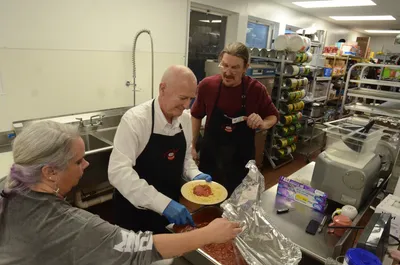
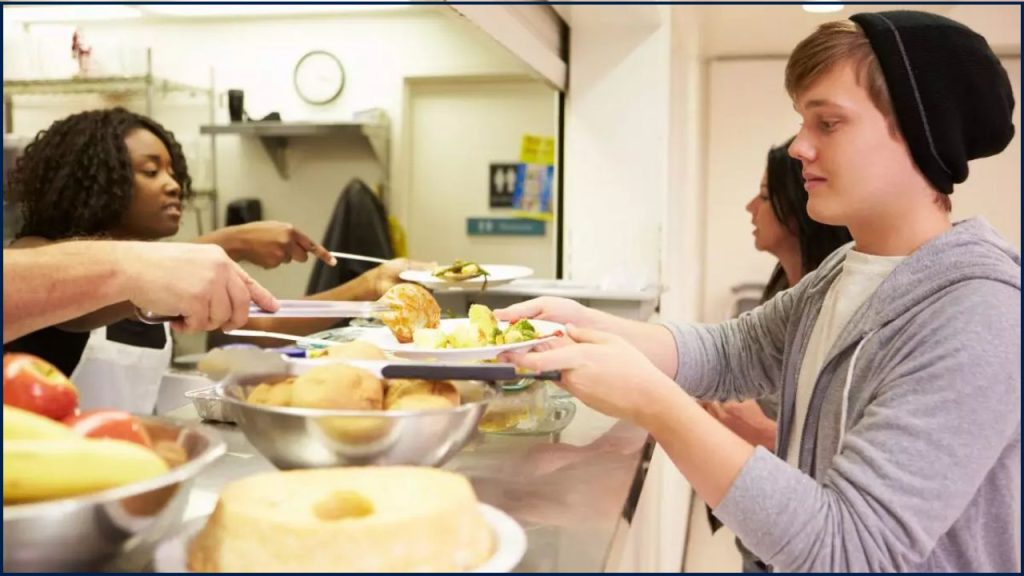
The Hickory Soup Kitchen operates as both a meal provider and a community resource hub. On weekdays, it serves free hot lunches to anyone who arrives, no identification required. In addition, the organization distributes monthly grocery boxes designed to supplement household food supplies.
The kitchen also offers hygiene products, showers, and referrals to partner organizations that provide housing, employment, and healthcare assistance.
“Hunger is often the visible symptom of deeper instability,” Walker said. “Food is the entry point, but people usually need more than that.”
Nonprofit data show that meal counts at the soup kitchen have remained consistently above pre-pandemic levels, with spikes during summer months when school meal programs pause.
Salvation Army: Structured Assistance and Fresh Food Access
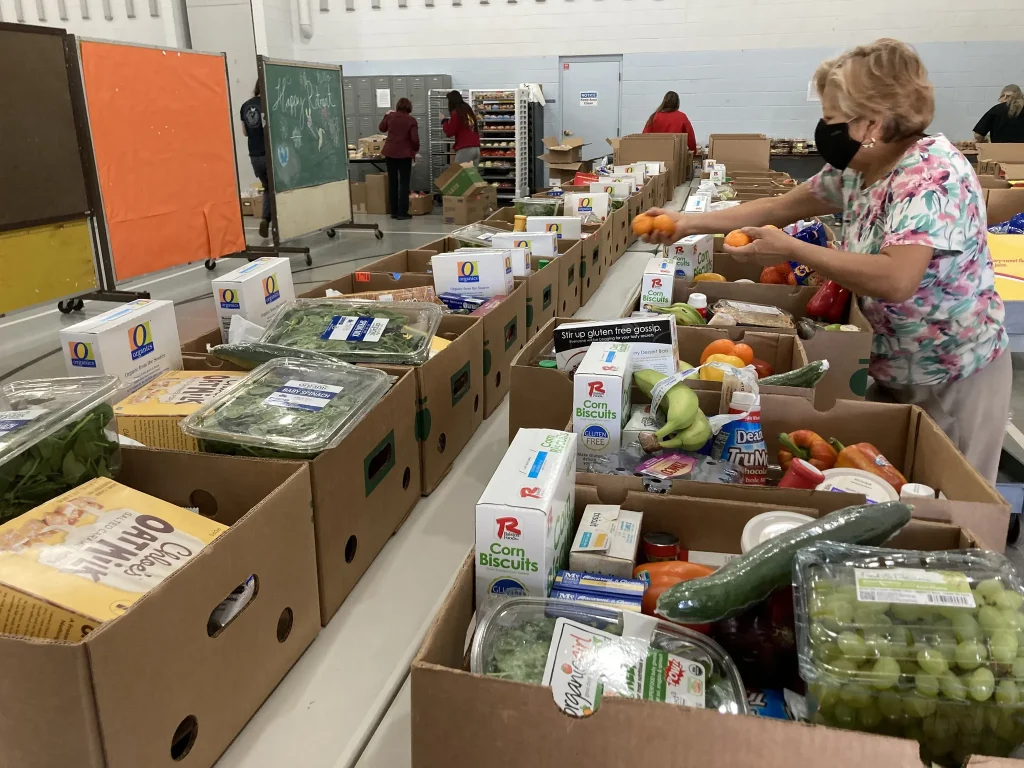
The Salvation Army of Greater Hickory and the High Country operates a food pantry that distributes grocery boxes to eligible households every two months. Clients must provide identification and proof of residence, requirements the organization says help ensure equitable distribution.
In partnership with Loaves & Fishes, the Salvation Army also hosts a weekly drive-through produce distribution, providing fresh fruits and vegetables at no cost while supplies last.
“Fresh food is often the hardest thing for families to access,” said Major Tina Postell, a Salvation Army officer in Hickory. “When budgets tighten, produce disappears first.”
The organization also provides meals through its Shelter of Hope program, serving individuals experiencing homelessness.
Why Food Insecurity Persists Despite Economic Growth
Nationally, unemployment remains low, and inflation has slowed compared to pandemic-era highs. However, economists note that essential costs—including rent, insurance, utilities, and food—have increased faster than wages for many households.
According to the U.S. Department of Agriculture, food insecurity disproportionately affects:
- Seniors on fixed incomes
- Households with children
- People with disabilities
- Rural and semi-urban communities
Dr. Elaine Rodriguez, a public policy researcher specializing in food systems, said the disconnect lies in structural costs.
“Even modest increases in grocery prices can destabilize households already operating at the margin,” Rodriguez said. “Food pantries are absorbing that pressure.”
The Hidden Geography of Hunger in Hickory
Food access challenges in Hickory are compounded by transportation barriers. Some neighborhoods lack nearby grocery stores, forcing residents to rely on convenience stores with higher prices and fewer nutritious options.
Advocates say food pantries help bridge that gap, but transportation remains a limiting factor for many residents, particularly seniors.
“People don’t always lack food,” Walker said. “Sometimes they lack access.”
Local agencies have responded by coordinating mobile distributions and drive-through services, though funding constraints limit expansion.
Funding Pressures and Volunteer Dependence
Both the Hickory Soup Kitchen and the Salvation Army rely heavily on private donations, grants, and volunteer labor. Federal commodity programs and state-level food bank partnerships supply a portion of inventory, but nonprofit leaders say volatility remains a concern.
“We plan month to month,” Postell said. “Supply chains are better than they were, but donations fluctuate.”
Volunteer shortages, particularly among younger residents, have also strained operations. Many longtime volunteers are retirees, a demographic that has shrunk since the pandemic.
How Local Efforts Fit Into the National Picture
Across the United States, food pantries have increasingly become semi-permanent institutions rather than emergency stopgaps. According to Feeding America, pantry usage remains significantly higher than pre-2020 levels in most regions.
Policy experts argue that while charitable food systems are critical, they cannot replace systemic solutions.
“Food pantries are not a failure,” Rodriguez said. “They are evidence of community resilience—but also of unresolved economic gaps.”
Collaboration and Community Coordination
In Hickory, coordination among nonprofits has helped reduce duplication and expand reach. Churches, civic groups, and local businesses contribute food, funding, and volunteer labor throughout the year.
Seasonal demand remains a challenge, particularly during winter holidays and summer school breaks. Agencies encourage residents to check schedules frequently, as distribution times and eligibility rules may change based on supply.
What Comes Next for Local Food Pantries
Looking ahead, leaders say planning has shifted from emergency response to long-term sustainability. Both organizations are exploring expanded partnerships, grant funding, and nutrition-focused programming.
“We are operating under the assumption that demand will continue,” Walker said. “The question is how we meet it responsibly.”
FAQ
Who qualifies for food assistance?
Most services are available to individuals and families experiencing food insecurity. Requirements vary by provider.
Is identification required?
Daily meals at the Hickory Soup Kitchen do not require ID. The Salvation Army requires ID and proof of address for pantry boxes.
How often can groceries be received?
Typically once per month or every two months, depending on the organization and household size.
Are fresh foods available?
Yes. Weekly produce distributions are offered through Salvation Army partnerships.